Free Chemistry Lesson Plans for Middle School Teachers
Download-ready chemistry lesson plan ideas for middle school covering matter, elements, chemical reactions, acids and bases, and lab safety with virtual lab integration.
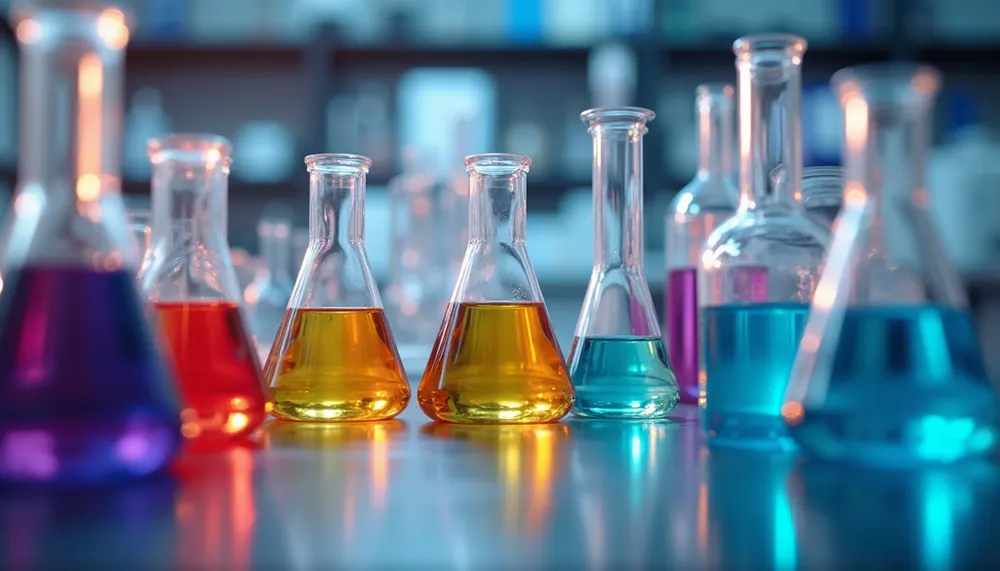
Teaching chemistry to middle school students is both a challenge and an opportunity. At this age, students are naturally curious about how the world works, but they can also be easily overwhelmed by abstract concepts and unfamiliar vocabulary. The key to successful middle school chemistry instruction is making concepts tangible, relevant, and engaging. This guide provides five complete lesson plan frameworks covering the most important chemistry topics for middle school, along with strategies for integrating virtual labs, assessing student understanding, and using technology to enhance learning.
Planning chemistry for middle school
Middle school chemistry typically covers the fundamentals: the nature of matter, atoms and elements, the periodic table, chemical reactions, and basic acid-base chemistry. The Next Generation Science Standards (NGSS) emphasize that students should develop an understanding of matter and its interactions (MS-PS1), including the structure and properties of matter, chemical reactions, and the conservation of matter. Effective lesson plans at this level should include hands-on activities, visual aids, real-world connections, and opportunities for students to ask questions and make predictions.
When planning your lessons, consider the prior knowledge your students bring. Many middle schoolers have informal ideas about chemistry from cooking, cleaning, and everyday observations, but these ideas may include misconceptions. For example, students often believe that matter disappears when it dissolves or that chemical reactions always involve explosions. Addressing these misconceptions directly is an important part of effective instruction.
Lesson 1: Introduction to matter and atoms
This lesson introduces students to the concept that all matter is made of tiny particles called atoms. Begin with a demonstration: show students a sugar cube and ask them to imagine breaking it into smaller and smaller pieces. At what point does it stop being sugar? This leads naturally to the idea of atoms and molecules. Use a simple animation or simulation to show that matter exists in three states — solid, liquid, and gas — and that the difference between these states is how the particles are arranged and how much they move.
Activity: Have students classify everyday objects as solids, liquids, or gases, then draw particle diagrams showing the arrangement of particles in each state. For an extension, introduce the concept of density by having students predict whether various objects will sink or float in water, then test their predictions. This lesson typically takes one 45-minute class period. Learning objectives: students can define matter, describe the three states of matter, and explain that all matter is made of atoms.
Lesson 2: Elements and the periodic table
This lesson introduces the periodic table as an organized chart of all known elements. Begin by asking students to name as many elements as they can — they will likely know oxygen, gold, iron, and a few others. Show them the periodic table and explain that each box represents one element, with its symbol, atomic number, and atomic mass. Focus on a few familiar elements and their properties: iron is a strong metal used in construction, oxygen is a gas we breathe, gold is a shiny metal used in jewelry.
Activity: Give each student or pair a periodic table and a set of element cards with clues (for example, "I am a gas that makes up 78% of the atmosphere" for nitrogen). Students use the periodic table to identify each element. For a more interactive experience, use a virtual periodic table tool where students can click on elements to learn about their properties. This lesson typically takes one to two class periods. Learning objectives: students can use the periodic table to find an element's symbol, atomic number, and atomic mass, and can describe the general organization of the table.
Lesson 3: Chemical reactions
This lesson introduces chemical reactions as processes where substances combine or break apart to form new substances. The classic baking soda and vinegar reaction is an ideal starting point because it is safe, dramatic, and easy to set up. Before the demonstration, ask students to predict what will happen when the two substances are mixed. After the reaction, discuss what they observed: bubbling (a gas was produced), temperature change, and the formation of new substances.
Explain that in a chemical reaction, the starting materials are called reactants and the new materials are called products. Introduce the concept of conservation of mass: the total mass of the reactants equals the total mass of the products, even though the substances have changed. Activity: Have students measure the mass of baking soda and vinegar before mixing (in a sealed bag to capture the gas), then measure the mass after the reaction. They should find that the mass is the same, demonstrating conservation of mass. This lesson typically takes one to two class periods. Learning objectives: students can identify reactants and products, describe signs of a chemical reaction, and explain conservation of mass.
Lesson 4: Acids and bases with indicators
This lesson introduces acids and bases using the pH scale and indicators. Begin by asking students about sour foods (lemon juice, vinegar) and slippery substances (soap, baking soda solution). Explain that sour substances are acids and slippery substances are bases, and that the pH scale measures how acidic or basic a substance is, from 0 (most acidic) to 14 (most basic), with 7 being neutral.
Activity: Provide students with red cabbage juice indicator (made by boiling red cabbage in water) and a set of household substances: lemon juice, vinegar, water, baking soda solution, and soap solution. Students add a few drops of each substance to the indicator and observe the color change. Red or pink indicates an acid, purple indicates neutral, and green or yellow indicates a base. Students record their observations and classify each substance. For a virtual alternative, use an online pH simulation where students can test virtual substances. This lesson typically takes one class period. Learning objectives: students can define acids and bases, use the pH scale, and use an indicator to classify substances.
Lesson 5: Lab safety fundamentals
Lab safety should be taught as a standalone lesson before any hands-on activities. Begin with a discussion of why safety matters: real examples of lab accidents (age-appropriate) help students understand that safety rules exist for important reasons. Cover the essential rules: wear safety goggles, do not eat or drink in the lab, handle chemicals carefully, know the location of safety equipment, and always follow the teacher's instructions.
Activity: Set up a lab safety scavenger hunt where students must locate the fire extinguisher, eyewash station, first aid kit, safety shower (if available), and emergency exits. Then present students with a series of lab safety scenarios (written on cards) and have them identify what is wrong and what should be done instead. For example: "A student is eating a snack while mixing chemicals" or "A student's long hair is hanging over a Bunsen burner flame." This lesson typically takes one class period. Learning objectives: students can identify essential lab safety equipment, explain key safety rules, and recognize unsafe lab behaviors.
Integrating virtual labs into lessons
Virtual labs can enhance every lesson in this series. For the matter and atoms lesson, a particle simulation lets students see how particles behave in different states. For the periodic table lesson, an interactive periodic table provides instant access to element properties. For the chemical reactions lesson, a virtual reaction simulator lets students explore reactions that would be too dangerous or expensive for the classroom. For the acids and bases lesson, a virtual pH lab lets students test dozens of substances without using real chemicals.
The key to effective virtual lab integration is to use virtual labs as a complement to, not a replacement for, hands-on activities. Use virtual labs for pre-lab exploration (letting students preview what they will do in the physical lab), for extending the lesson (exploring additional reactions or substances), and for review and assessment (having students demonstrate their understanding in a virtual environment).
Assessment ideas
Assessment in middle school chemistry should go beyond traditional tests. Consider using lab reports (even simple ones where students describe what they did, what they observed, and what they learned), concept maps (where students draw connections between key terms), exit tickets (short questions at the end of class to check understanding), and portfolio assessments (where students collect their best work over a unit). Virtual lab platforms that include built-in assessment tools can save teachers significant time by automatically tracking student progress and providing data on which concepts students have mastered and which need more work.
Using MyChemLab AI in your classroom
MyChemLab AI is designed to support exactly the kind of teaching described in these lesson plans. The platform's AI tutor can answer student questions in real time, freeing you to work with students who need the most help. The gamified chemistry quests turn review into an engaging activity that students actually want to do. The compound explorer lets students look up any element or compound and see its properties and 3D structure, making the periodic table come alive. And the teacher dashboard lets you create classes, assign activities, track progress, and use AI-assisted grading — all for free. Whether you use MyChemLab AI as your primary virtual lab or as a supplement to other tools, it provides the AI-powered support and engagement features that make chemistry accessible and exciting for middle school students.